
Euglossa dilemma
Summary
| Type |
organism
|
|---|---|
| Genus |
Euglossa
|
| Species |
dilemma
|
| Common Name |
Euglossa dilemma
|
| Genome Browser | |
| Description |
Bees provide indispensable pollination services and have become important models for the study of learning and memory, plant-insect interactions and social behavior. Here we describe the nuclear and mitochondrial genomes of the facultatively eusocial orchid bee Euglossa dilemma. Comparative analyses of the genome assembly to the honey bee genome revealed high conservation of gene synteny between the two species, despite an order of magnitude difference in genome size and 80 million years of divergence time. Our study provides valuable genomic resources for genetic analyses on the ecology, evolution, and conservation of orchid bees and the evolution of sociality in bees.
|
| Publication |
Brand P, Saleh N, Pan H, Li C, Kapheim KM, Ramírez SR. The Nuclear and Mitochondrial Genomes of the Facultatively Eusocial Orchid Bee Euglossa dilemma. . G3 (Bethesda, Md.). 2017 09 07; 7(9):2891-2898.
|
| Organism Image |
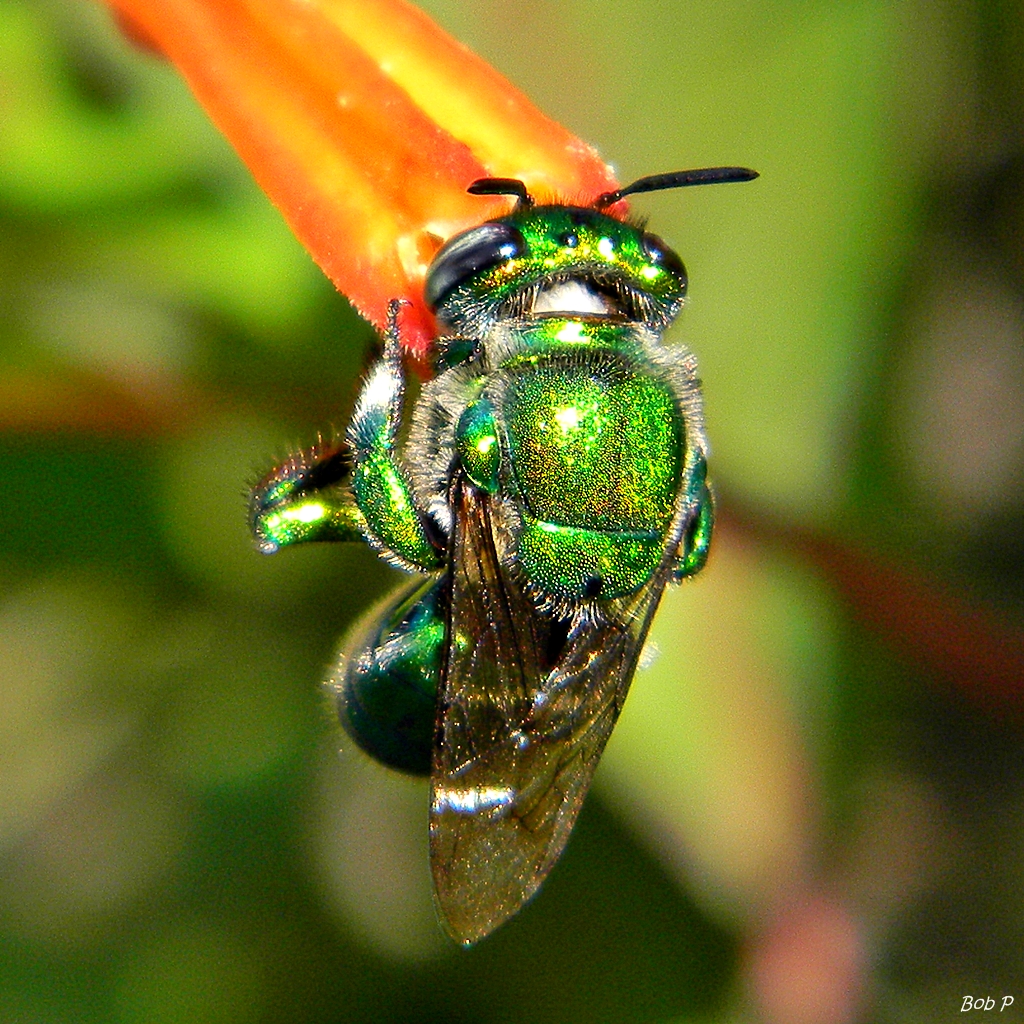
|
| Image Credit |
Bob Peterson. View Source. CC BY-SA 2.0
|
Assembly Stats
| Contig N50 |
NA
|
|---|---|
| GC Content |
39.3
|
| Scaffold N50 |
143590
|
Other Information
| Community Contact |
Philipp Brand, Rockefeller University
|
|---|---|
| Links |
Analyses
| Name | Program | Status Sort ascending |
|---|---|---|
| Euglossa dilemma genome assembly Edil_v1.0 (GCA_002201625.1/NIJG01) | Allpaths-LG | Current |
| Euglossa dilemma annotations v1.0 | Augustus 3.2.2, exonerate v2.42.1, tblastn, SNAP | Current |
| Functional annotation of Euglossa dilemma GeneSet v1-0 | AgBase functional annotation pipeline | Current |